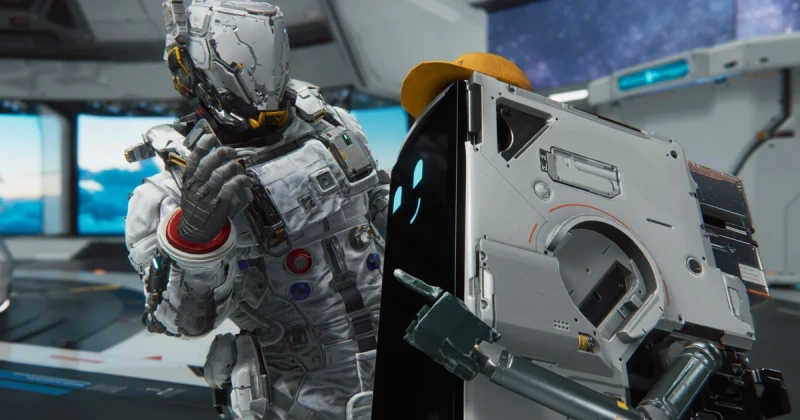
What Is Pragmata and Why Is It Confusing?
Pragmata is a sci-fi action game from Capcom, built to blend third-person shooting, hacking, and puzzle-solving into one unusual loop. In practice, it asks you to manage combat and digital interference at the same time, so the game can feel slow, then suddenly overwhelming, if you don’t understand its core systems.
Pragmata guide 2026 searches usually come from players trying to decode the game’s terminology, mission flow, and combat rhythm. The short version: you are not just aiming and firing like in a standard third-person shooter. You are also breaking enemy defenses, controlling space, and reacting to layered objectives that reward patience more than raw aggression.
The reason this matters is simple: Pragmata is designed like an action game with a strategic second brain. If you ignore the hacking layer, encounters take longer and cost more resources. If you learn the flow early, the game becomes much more readable, much easier to manage, and far more satisfying.
How Pragmata’s Core Gameplay Loop Works
Pragmata appears to be built around a dual-character system where movement, combat, and hacking are intertwined. The central idea is that one part of the game handles pressure and positioning while the other manipulates enemy states, defenses, or environmental locks. That design makes it closer in spirit to Control and Resident Evil 4 than to a pure cover shooter.
If you’re coming from Capcom’s other action titles, think of it as a puzzle layer sitting on top of familiar third-person combat. The RE Engine pedigree matters here: Capcom’s modern engine is known for tight animation, strong lighting, and responsive character control, which is exactly what a game like Pragmata needs to make its mixed systems feel good rather than clunky.
- Action layer: positioning, aiming, dodging, and target priority
- Hacking layer: disabling protection, opening routes, or weakening enemies
- Resource layer: ammo, cooldowns, timing, and risk management
- Exploration layer: scanning arenas, reading terminals, and solving objective paths
For most players, the biggest mistake is treating every encounter like a shooting gallery. Pragmata rewards people who pause, read the room, and think two moves ahead. That’s why it can feel opaque in early hours: the game expects you to understand systems before it fully explains their payoff.
Step-by-Step: How to Learn Pragmata Faster
If you want a practical how to play Pragmata approach, start by simplifying the game into repeatable habits. Do not try to master every mechanic at once. Instead, learn one safe combat pattern, one movement habit, and one interaction rule per session.
- Identify the threat first. Before shooting, look for shields, weak points, status effects, or interaction prompts.
- Use the hacking layer early. If an enemy or door looks resistant, assume a digital solution is part of the answer.
- Control distance. Stay far enough away to read attacks, but close enough to react to the next objective.
- Clear the smallest danger first. Remove the enemy or obstacle that limits movement before chasing damage.
- Re-check objectives after every fight. Many confusion points in sci-fi games happen because players miss a terminal, panel, or route trigger.
- Save ammo for confirmed openings. Don’t waste resources on protected targets if the hacking layer is meant to expose them.
That approach also helps with what many players would call a reduce stuttering PC mindset in a broader sense: not frame stuttering, but mental stutter. The game’s systems can feel chaotic until your actions become automatic. Once that happens, encounters speed up dramatically and the whole structure feels cleaner.
If Pragmata follows the style Capcom has used in recent action releases, expect encounters to be designed around pattern recognition, spacing, and quick adaptation. That means the best players are not necessarily the best aimers; they are the best readers of the arena.
What the Game Is Really Asking You to Do
Pragmata is less about memorizing a long list of commands and more about understanding intent. When a game mixes gunplay with puzzle logic, the key question is always: what is the system protecting, and how do I strip that protection away? That is why Pragmata’s confusing terminology matters so much. Once you identify the game’s verbs, the rest starts to click.
For example, when a game like this introduces terms for locks, nodes, scans, or linked actions, those are usually not flavor text. They are instructions hidden inside sci-fi language. You should read them as functional prompts, not lore decoration. If you do, progression becomes faster and you’ll stop bouncing off the game’s early learning curve.
Pragmata also stands out because of its atmosphere. Capcom tends to anchor its best games in strong genre identity, and this one leans into a lonely, high-tech, near-future tone that can appeal to fans of Death Stranding, System Shock, and Metroid Prime for different reasons. It is not the same kind of game as those titles, but it shares the feeling of deciphering an unfamiliar world piece by piece.
That design is a strength, but it’s also a barrier. If you want instant gratification, Pragmata may feel slow at first. If you enjoy unraveling mechanics and making sense of a weird system, it can become the kind of game that rewards attention more than reflexes.
Troubleshooting Common Pragmata Problems
Why does Pragmata feel like it explains nothing?
This is often a design choice, not a mistake. Games that combine action and logic frequently delay full explanation so players learn by context rather than tutorial text. If you feel lost, revisit terminals, objective markers, and the first prompt after every new mechanic because the game often expects you to connect clues yourself.
What if an enemy seems impossible to damage?
In hybrid action games, that usually means you are missing the intended setup step. Look for shields, weak points, or a hacking route that disables the enemy’s protection first. If your shots are barely registering, stop dumping ammo and search for the system the game wants you to interact with before combat continues.
How do I stop getting stuck in objectives?
Re-scan the environment and check for panels, doors, power nodes, or route changes after every encounter. The most common mistake is assuming the next step is another fight when the real answer is environmental interaction. If a room looks cleared but progression halts, you likely missed a trigger.
How can I make the learning curve easier?
Play more slowly than you would in a standard shooter. The game is likely to reward deliberate movement, threat assessment, and efficient sequencing. If you treat every space like a puzzle room first and a combat arena second, you’ll avoid most early frustration.
Is Pragmata Worth Your Time in 2026?
Yes, if you like unusual Capcom experiments and don’t mind a game that asks you to think. Pragmata is shaping up to be the kind of title that becomes much better once the systems settle into your muscle memory. It is not aiming for the straightforward power fantasy of Resident Evil 4, nor the open-ended freedom of a typical action RPG.
Instead, it occupies a more niche but potentially more memorable space: a high-concept sci-fi adventure with layered combat and a strong identity. Players who enjoy methodical action, atmospheric worldbuilding, and learning by doing will get the most out of it. Players who want a quick, easy win may struggle more than they expect.
For gamers planning ahead, Pragmata is also the kind of title worth watching for digital availability and edition differences once preorders open more broadly. If you usually buy your game keys online, keep an eye on TuniGamers for a fast digital purchase option when it becomes available. It’s a smart move if you prefer instant delivery over waiting for physical stock.
And if you’re building a sci-fi backlog, Pragmata sits nicely beside other atmosphere-first games like Death Stranding, Control, and System Shock. That comparison should tell you everything: this is a game for players who enjoy strange worlds, strong aesthetics, and systems that reveal their depth over time. If Capcom nails the pacing, it could be one of the most distinctive action games of 2026.
Frequently Asked Questions
What kind of game is Pragmata?
Pragmata is a sci-fi action game with third-person shooting, hacking, and puzzle-solving elements. It is developed by Capcom and appears designed around layered combat rather than pure gunplay, so understanding its systems is more important than just fast reflexes.
Is Pragmata difficult to learn?
It can be, especially in the beginning, because the game seems to expect players to infer mechanics from context. Once you learn to read enemy defenses, use the hacking layer early, and slow down during exploration, the difficulty becomes much more manageable.
What engine does Pragmata use?
Capcom games of this type are strongly associated with the RE Engine, which is known for performance, animation quality, and detailed environments. That engine is a good fit for Pragmata’s sci-fi presentation and precise combat feel.
Will Pragmata be good for fans of Resident Evil or Control?
Yes, especially if you like games that mix action with environmental problem-solving. It is not a horror game like Resident Evil, but it shares Capcom’s emphasis on tight systems, while its atmosphere and layered design may also appeal to Control fans.
Where can I buy Pragmata digitally?
When digital listings are live, TuniGamers is a convenient place to check for game keys and instant delivery. If you prefer buying online instead of waiting for physical copies, that is usually the fastest option.
Updated 18 Sep 2026
Related Posts

The Blood of Dawnwalker Armor Proficiency Guide 2026: How to Fix Heavy Armor Penalties
The Blood of Dawnwalker armor proficiency determines when Medium Armor and Heavy Armor stop draining stamina and slowing you down. Here’s how the Swordmastery skill tree works, what to unlock first, and how to avoid costly mistakes.

A game leaves Game Pass: what happens to DLC and saves?
Separate catalogue departure from subscription expiry before deciding what to buy or keep.

Reinstall Windows 11: protect files, activation and BitLocker keys
Prepare recovery without confusing repair, wiping a drive and buying another Windows licence.

Steam Cloud conflicts and Xbox saves: protect your progress
Identify the correct save and verify synchronisation before playing on another device.

Fortnite: identify your Epic account before linking a console
Find the account holding your progress and items before changing a console connection.